

Look at this backtest I found online:
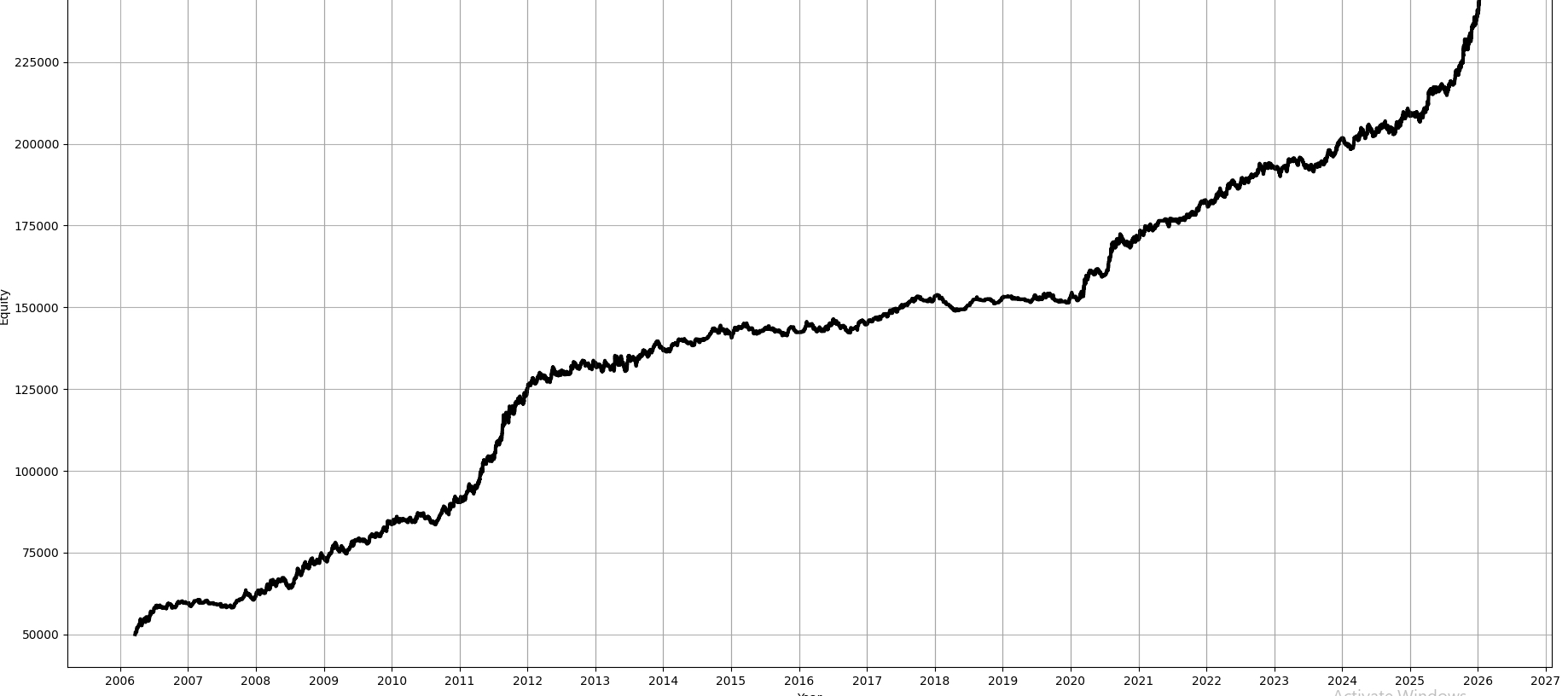
One of your first thoughts when looking at a stranger’s backtest is probably that it’s overfit, or that there is some look-ahead somewhere.
When you go a step further, you are probably constantly worried about overfitting your own backtests too!
In this article, we will introduce a framework that allows you to identify both! It’s a two-stage approach introduced in D. Nikolopoulos (2026). We will introduce the method, develop the two-stage approach, test the methodology empirically on a crypto dataset, look at some limitations, and also add some improvements of my own!
I write about quantitative trading the way it’s actually practiced:
Robust models and portfolios, combining signals and strategies, understanding the assumptions behind your models.
More broadly, I write about:
Statistical and cross-sectional arbitrage
Managing multiple strategies and signals
Risk and capital allocation
Research tooling and methodology
In-depth model assumptions and derivations
If this way of thinking resonates, you’ll probably like what I publish.