

The clock is wrong
I can guarantee that over 99.9% of backtests are run on data sampled by the clock. One-minute bars, hourly bars, daily bars, etc. We treat the choice of intervals between data points as a matter of resolution and move on.
But the market doesn’t care about the clock. At the US open, a one-minute BTC bar contains thousands of trades, and prices often move more than the previous hour combined, while during some other random minute of the day there is barely any activity. We label both “one minute”, stack them into the same return series, and then obviously observe fat tails, volatility clustering, and seasonalities.
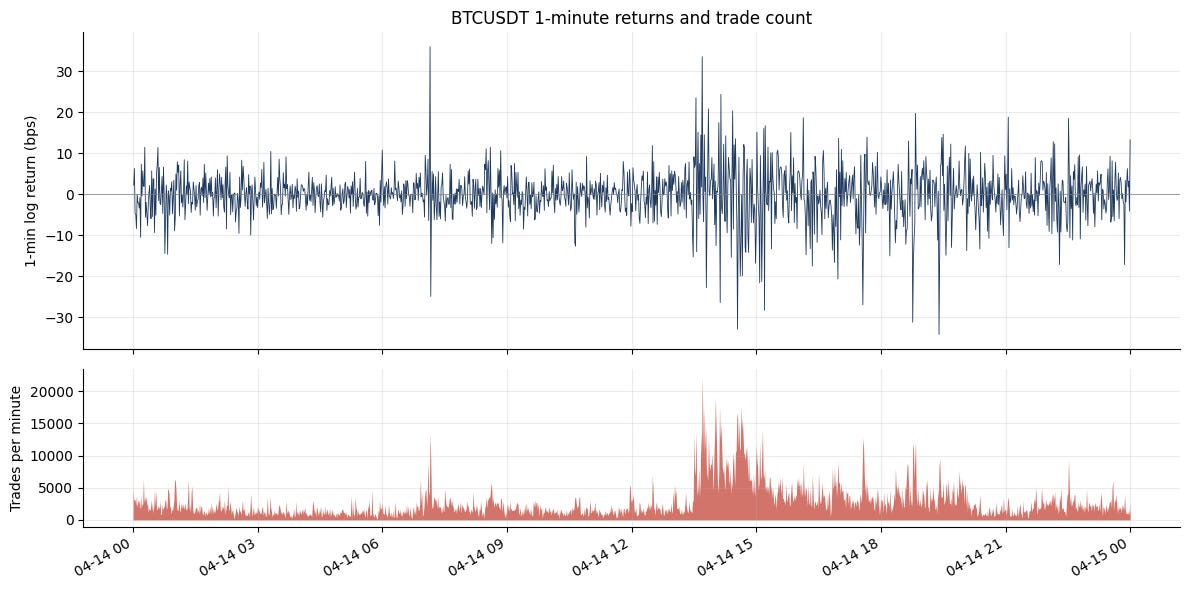
Measure the market in its own units of activity instead of in minutes, and a surprising amount of this structure simply goes away.
That matters more than it sounds. Tons of methods assume identically distributed observations, and trying to “fix” the presence of things like volatility clustering and fat tails is often quite heuristic.
I write about quantitative trading the way it’s actually practised:
Robust models and portfolios, combining signals and strategies, understanding the assumptions behind your models.
Topics I write about include portfolio construction, market making, risk management, research methodology, and more.
If this way of thinking resonates, you’ll probably like what I publish.